
What is operational yield? A plain-language explainer.
Ask most yield products where their number comes from and you get a circular answer. Token emissions stop when protocols stop printing. Lending spreads compress when credit tightens. Treasury rates follow whatever the Fed does in September. Every number is contingent on something else staying intact.
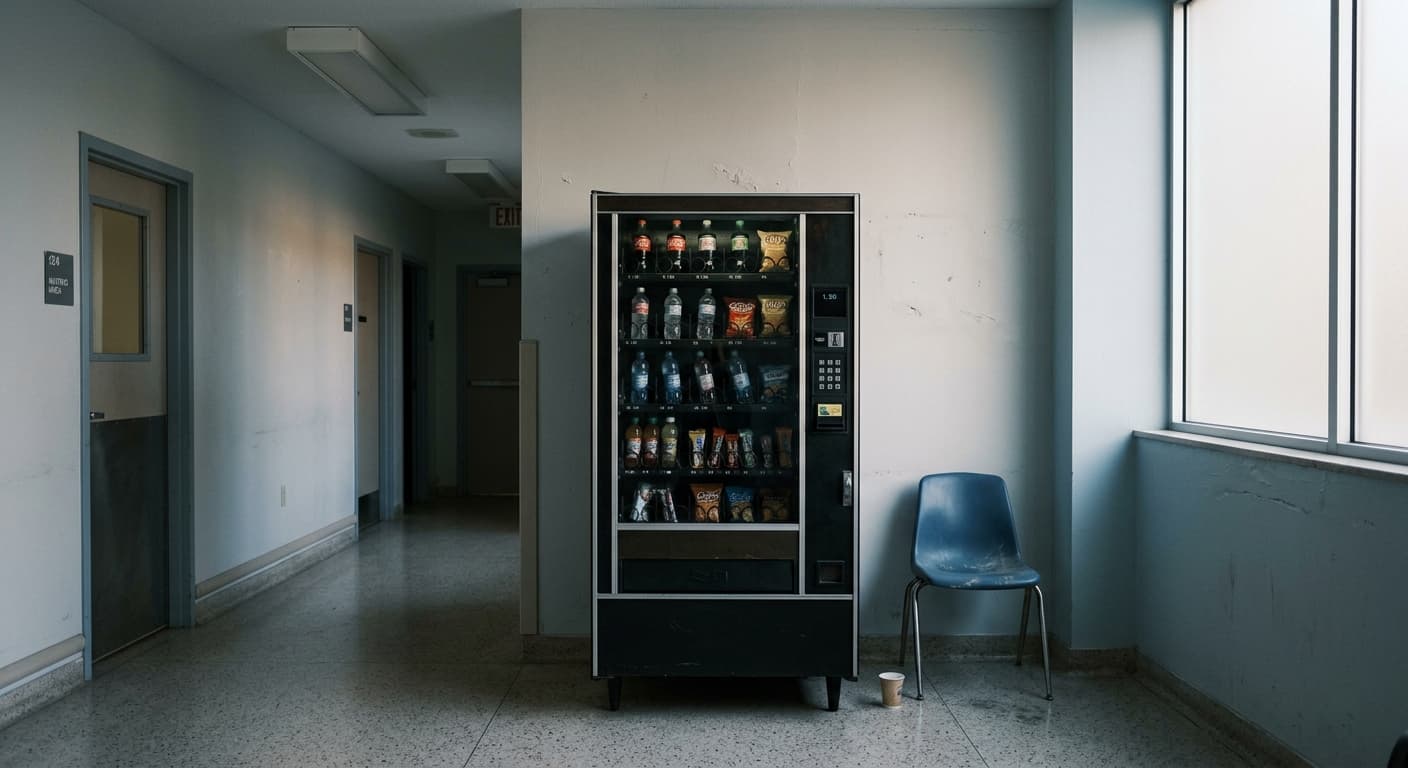
Operational yield is different. It comes from physical machines (laundromats, HVAC units, arcade machines, vending networks) that earn by running, not by being financed and not by issuing tokens. A quarter goes into a washing machine. The machine runs the cycle. That margin distributes.
Most yield can't answer this question
The most useful question to ask any yield product: what physical event creates the money? For a savings account, someone else borrows at a spread above what you earn, benchmarked to a rate that moves when policymakers vote. For DeFi lending, borrowers post crypto collateral and pay interest that only existed while demand for leverage existed. Both answers require something outside the product to cooperate.
Operational yield has a direct answer: a machine ran, collected a payment, and generated margin. US laundromats average $150,000 in annual revenue at roughly 60% gross margins, with net margins on deployed capital running 20-35%. The yield ceiling is whatever the machine earns, not a policy rate or a token price. When rates fall 200 basis points, the laundromat still earns 60 cents on the dollar.
The machine doesn't have a view on rates
Savings accounts follow the Fed. DeFi yields follow crypto markets. Operational yield follows utilisation. A laundromat running 300 cycles a day earns the same margin whether ETH is at $4,000 or $400, because the people using it don't have a crypto portfolio. They need clean clothes.
US laundromats have a 95% five-year survival rate, against 51.5% for small businesses broadly. They ran through the dot-com bust, through 2008, through every rate cycle and crypto collapse on record. The machines kept running because demand for their output never went away. That's not a narrative about resilience. It's just what happens when the thing you sell is something people need whether markets are up or down.
Where the money actually goes
Every machine in DualMint's portfolio carries IoT sensors that record cycle counts, uptime, and revenue patterns separately from anything the operator reports. At month end, the operator submits their revenue report. DualMint cross-references it against the telemetry. A machine that ran 6,200 cycles cannot be reported as 62,000. The sensor data is the check. If the numbers reconcile, the distribution releases in USDC on the first of the month. If they don't, nothing moves until it's resolved.
The revenue source is physically recorded at the transaction level, not self-reported by the party who benefits from reporting it higher.
Thirteen months, no exceptions
Since May 2025, the DualMint marketplace has distributed yield every month without missing one. Twelve consecutive distributions, zero operator defaults. That stretch covered three Fed rate decisions and the moment when $8 billion left DeFi protocols in 48 hours. The laundromats ran the same cycles through all of it.
Thirteen months without a default isn't a guarantee. It's evidence that verifying revenue from the machine itself, rather than trusting operator reports, produces a different outcome. The model held while other things broke.
What non-correlated actually means in practice
Non-correlated gets used loosely. Here it means something specific: the yield source is the physical economy, which runs on different inputs than equity markets or rate cycles. People need clean clothes in a recession. Buildings need climate control in a bear market. The machines don't know what crypto is doing.
DualMint's Machine Yield Index pools cash flow from laundromats, HVAC units, arcade machines, and vending networks into a single onchain position. 10-15% net annual yield in USDC, distributed monthly from verified machine revenue. It isn't live yet. The marketplace behind it has been running since May 2025 and has the receipts.
Follow DualMint